

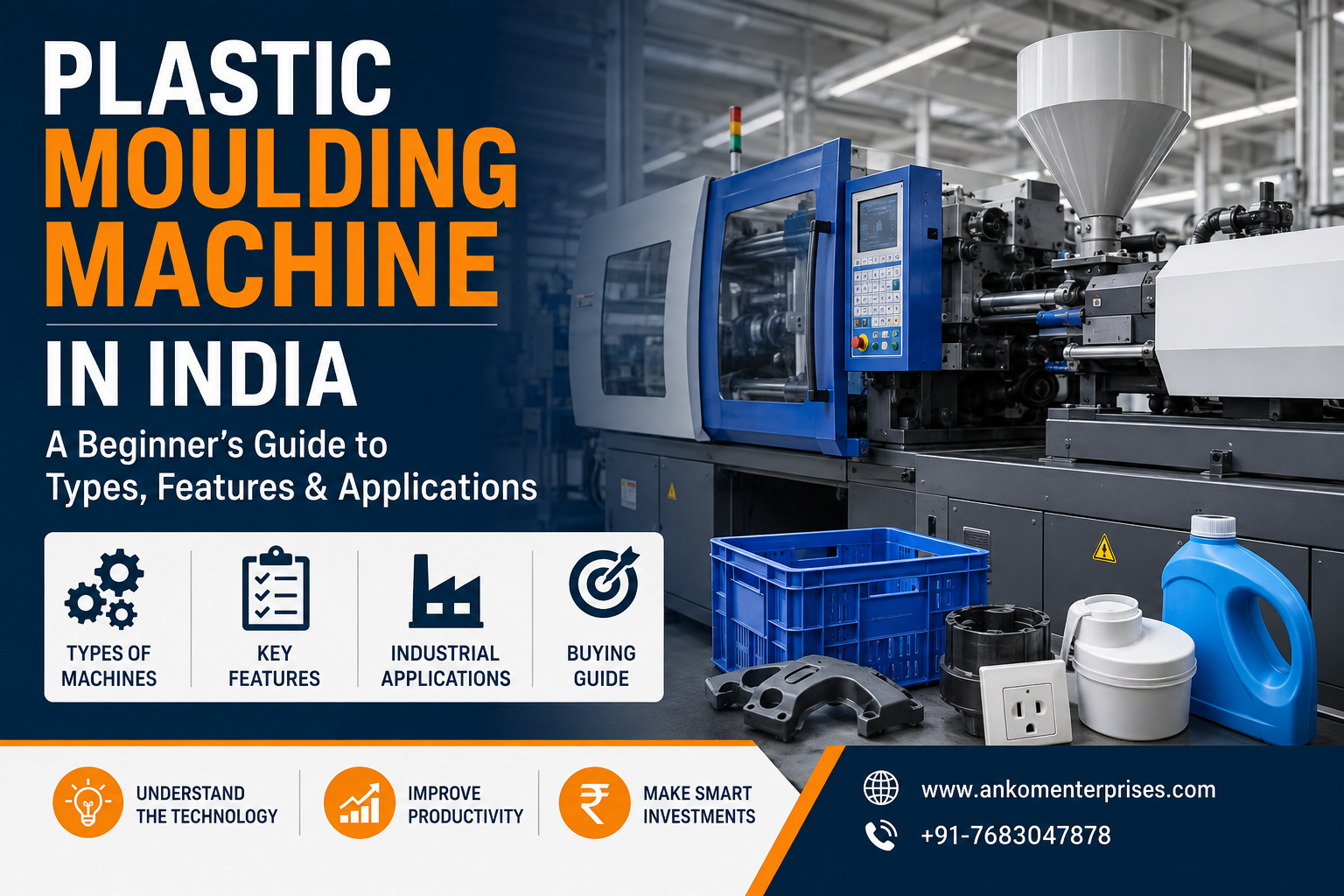
A plastic moulding machine in India is industrial equipment used to shape molten plastic into precise products such as automotive parts, electrical components, packaging items, medical parts and household products. Beginners should understand machine types, clamping systems, injection capacity, automation features and application areas before investing in a moulding machine.
India has become one of the fastest-growing manufacturing hubs for plastic products. From consumer goods and automotive components to medical devices and industrial parts, plastic moulding technology is widely used across industries. Choosing the right plastic moulding machine is crucial because it directly affects product quality, production speed, energy consumption and operating cost.
For new manufacturers, the market can seem confusing due to different machine types, tonnage ranges and automation options. This guide explains everything a beginner needs to know about plastic moulding machines in India, including types, features, applications, benefits and buying tips.
What Is a Plastic Moulding Machine?
A plastic moulding machine melts plastic raw material and injects or forms it into a mould cavity. After cooling, the mould opens and the finished product is ejected. The process enables mass production of identical components with high accuracy.
Basic working process
- Plastic granules are fed into the hopper.
- Material melts inside the heated barrel.
- Molten plastic is injected into the mould.
- The mould cools the plastic.
- The product is ejected and the cycle repeats.
Major Types of Plastic Moulding Machines in India
1. Injection Moulding Machine
This is the most common type used in Indian manufacturing.
Best for: Automotive parts, electrical housings, bottle caps, medical components and consumer products.
Advantages
- High production speed
- Excellent dimensional accuracy
- Suitable for complex shapes
- Low material wastage
2. Blow Moulding Machine
Used to manufacture hollow products.
Best for: Bottles, containers, drums and tanks.
Advantages
- Ideal for hollow items
- Lightweight products
- Fast cycle time
3. Extrusion Moulding Machine
Plastic is continuously pushed through a die.
Best for: Pipes, sheets, films, profiles and cables.
Advantages
- Continuous production
- High output rate
- Economical for long products
4. Compression Moulding Machine
Material is placed in an open mould and compressed.
Best for: Thermoset products, electrical components and industrial parts.
Advantages
- Suitable for large parts
- Good surface finish
- Lower tooling complexity
5. Rotational Moulding Machine
Powdered plastic rotates inside a heated mould.
Best for: Water tanks, playground equipment and large hollow products.
Advantages
- Uniform wall thickness
- Low internal stress
- Large product manufacturing
Comparison of Machine Types
| Machine Type | Product Type | Production Speed | Accuracy | Typical Industries |
|---|---|---|---|---|
| Injection | Solid precision parts | High | Very High | Automotive, electrical, medical |
| Blow | Hollow products | High | Medium | Packaging, beverages |
| Extrusion | Continuous products | Very High | Medium | Pipe, film, cable |
| Compression | Thermoset parts | Medium | Medium | Electrical, industrial |
| Rotational | Large hollow products | Low | Medium | Tanks, outdoor products |
Important Features Beginners Should Understand
Clamping Force
Measured in tons, clamping force keeps the mould closed during injection. Small products may need 50–150 tons, while large automotive parts may require 500+ tons.
Injection Capacity
Indicates how much molten plastic can be injected in one cycle.
Screw Diameter
Affects melting efficiency and shot size.
Energy Efficiency
Modern servo-hydraulic and electric machines consume significantly less power than conventional hydraulic machines.
Automation Compatibility
Robots and automatic part removal systems improve productivity and reduce labour costs.
Control System
PLC and touchscreen controls make operation easier and improve process consistency.
Safety Features
Look for emergency stop systems, guard interlocks and overload protection.
Hydraulic vs Servo-Hydraulic vs Electric Machines
| Feature | Hydraulic | Servo-Hydraulic | Electric |
| Initial Cost | Low | Medium | High |
| Power Consumption | High | Low | Very Low |
| Precision | Medium | High | Very High |
| Maintenance | Medium | Medium | Low |
| Best For | Budget setups | Most Indian factories | High precision manufacturing |
For most Indian SMEs, servo-hydraulic machines offer the best balance between cost and energy savings.
Common Plastic Materials Used
- PP (Polypropylene): Packaging, household items
- PE (Polyethylene): Containers, pipes
- ABS: Appliance and automotive parts
- PVC: Pipes and fittings
- PET: Bottles
- Nylon (PA): Engineering components
- Polycarbonate (PC): Transparent and high-strength parts
Machine selection depends on the material’s melting temperature and processing requirements.
Applications Across Indian Industries
Automotive
- Dashboards
- Interior trims
- Connectors
- Clips and fasteners
Electrical & Electronics
- Switches
- Plug tops
- Enclosures
- Circuit housings
Medical
- Syringe components
- Diagnostic device parts
- Disposable medical items
Packaging
- Caps
- Closures
- Containers
- Cosmetic packaging
Home Appliances
- Knobs
- Handles
- Covers
- Internal plastic assemblies
Industrial Products
- Gears
- Bushes
- Machine guards
- Technical plastic components
Advantages of Plastic Moulding Machines
- High-volume production capability
- Consistent product quality
- Reduced labour requirement
- Minimal material waste
- Excellent repeatability
- Ability to produce complex shapes
- Lower cost per part at scale
Limitations to Consider
- Initial mould cost can be high.
- Machine setup requires technical knowledge.
- Product design changes may require mould modification.
- Skilled operators are important for maintaining quality.
How to Choose the Right Machine in India
Step 1: Define the Product
Know the product size, weight and material.
Step 2: Estimate Production Volume
Higher production volumes justify more automated machines.
Step 3: Select Tonnage
Choose clamping force based on mould size and projected area.
Step 4: Check Power Availability
Ensure your facility can support the machine’s electrical load.
Step 5: Evaluate After-Sales Support
Choose suppliers with service engineers, spare parts and training support in India.
Step 6: Consider Future Expansion
Buy a machine that allows moderate future capacity growth.
Approximate Price Range in India (2026)
| Machine Size | Approximate Range |
| 50–100 Ton | ₹5–15 lakh |
| 120–250 Ton | ₹10–35 lakh |
| 300–500 Ton | ₹25–80 lakh |
| 500+ Ton | ₹60 lakh to several crores |
Prices vary by brand, automation level and country of origin.
Maintenance Tips for Long Machine Life
- Clean hopper and barrel regularly.
- Use recommended hydraulic oil.
- Inspect heaters and thermocouples.
- Lubricate moving parts.
- Check mould alignment frequently.
- Maintain proper cooling water quality.
- Record machine parameters and breakdown history.
Preventive maintenance reduces downtime and extends machine life.
Latest Trends in Plastic Moulding Machines in India
Industry 4.0 Connectivity
Machines now support production monitoring and data logging.
Energy-Efficient Servo Systems
Factories are increasingly replacing conventional hydraulic machines.
Robotic Automation
Automatic part handling improves consistency.
Predictive Maintenance
Sensors help detect failures before breakdowns occur.
Sustainable Processing
Machines are being optimized for recycled plastics and reduced energy consumption.
Common Mistakes Beginners Should Avoid
- Buying oversized machines
- Ignoring mould quality
- Choosing the lowest price only
- Underestimating electricity costs
- Neglecting operator training
- Purchasing without service support
A plastic moulding machine is a long-term manufacturing investment. Beginners in India should first understand machine types, product requirements, clamping force, energy efficiency and supplier support before making a purchase. Injection moulding remains the most versatile option for precision plastic components, while blow, extrusion and rotational moulding serve specialized applications. Careful selection and proper maintenance can significantly improve productivity, product quality and profitability.
Frequently Asked Questions (FAQs)
1. Which plastic moulding machine is best for beginners in India?
For most beginners manufacturing solid plastic components, a servo-hydraulic injection moulding machine is usually the best choice because it offers good accuracy, reasonable cost and lower power consumption.
2. What is the difference between injection moulding and blow moulding?
Injection moulding produces solid precision parts, while blow moulding produces hollow products such as bottles and containers.
3. How much does a plastic moulding machine cost in India?
Small machines may start around ₹5 lakh, while medium and large industrial machines can range from ₹10 lakh to several crores depending on tonnage and automation.
4. Which industries use plastic moulding machines the most?
Major users include automotive, electrical, electronics, packaging, medical, home appliances and industrial manufacturing sectors.
5. What power-saving features should I look for?
Look for servo motors, variable-speed pumps, energy monitoring systems and automatic shutdown functions.
6. How often should a moulding machine be maintained?
Basic inspection should be done daily, while preventive maintenance is typically performed monthly or quarterly depending on machine usage.
7. Can recycled plastic be used in moulding machines?
Yes, many modern machines can process recycled plastics, provided the material is properly sorted, cleaned and processed.
8. What is clamping force and why is it important?
Clamping force is the pressure that keeps the mould closed during injection. Insufficient clamping force can cause flash, leakage and defective parts.