

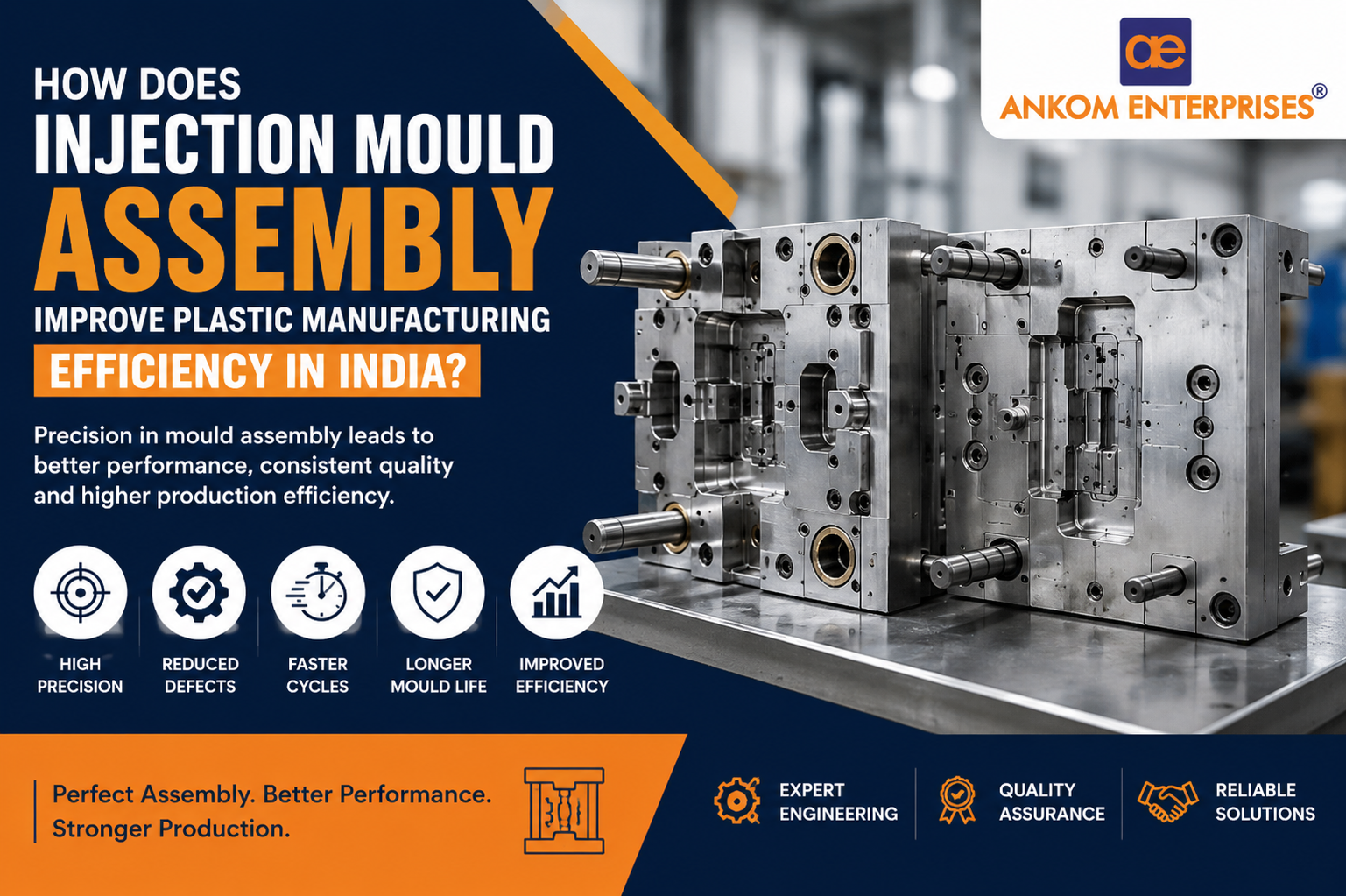
Injection mould assembly in India improves plastic manufacturing efficiency by ensuring accurate alignment, smooth mould movement, reliable ejection, and consistent component production. Proper assembly minimizes defects, reduces downtime, supports faster production cycles, improves mould life, and helps manufacturers maintain consistent product quality while controlling production and maintenance costs.
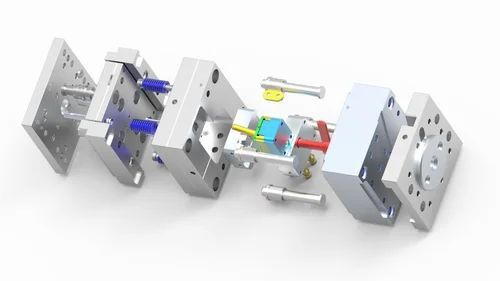
Injection mould assembly is a critical stage in the plastic manufacturing process. An injection mould consists of several precision components, including core and cavity plates, guide pillars, bushes, ejector systems, sliders, lifters, cooling channels, and other mechanisms. Each component must be correctly positioned, aligned, and tested before the mould is used for production.
In India’s competitive manufacturing sector, efficient mould assembly can directly influence production speed, component quality, maintenance requirements, and overall manufacturing costs. A professionally assembled mould allows the injection moulding machine to operate more smoothly and consistently.
How Injection Mould Assembly Improves Manufacturing Efficiency
1. Ensures Accurate Component Alignment
Proper alignment between the core and cavity is essential for producing components with accurate dimensions. Precision assembly minimizes mismatch, uneven wear, and unnecessary stress on mould components.
2. Reduces Manufacturing Defects
A correctly assembled mould can help reduce common problems such as:
- Flash
- Short shots
- Dimensional variations
- Improper ejection
- Surface defects
- Parting-line mismatch
- Component deformation
Reducing these issues means less material waste and fewer rejected components.
3. Supports Faster Production Cycles
Smooth movement of mould components helps maintain consistent opening, closing, injection, cooling, and ejection cycles. Reliable operation can improve production output and reduce unnecessary cycle interruptions.
4. Improves Mould Durability
Incorrect assembly can create excessive friction, pressure, or mechanical stress. Proper fitting and alignment help minimize premature wear and contribute to longer service life for mould components.
5. Reduces Machine Downtime
A properly assembled mould is less likely to experience frequent mechanical problems during production. This helps manufacturers reduce unplanned stoppages and maintain more consistent production schedules.
6. Improves Ejection Performance
The ejector system must operate accurately to remove finished plastic components without damaging the product or mould. Correct assembly helps ensure smooth and reliable ejection.
7. Supports Consistent Product Quality
Manufacturers often require thousands or millions of identical components. Precision mould assembly helps maintain repeatable mould performance, which is important for maintaining consistent product dimensions, appearance, and functionality.
Important Steps in Injection Mould Assembly
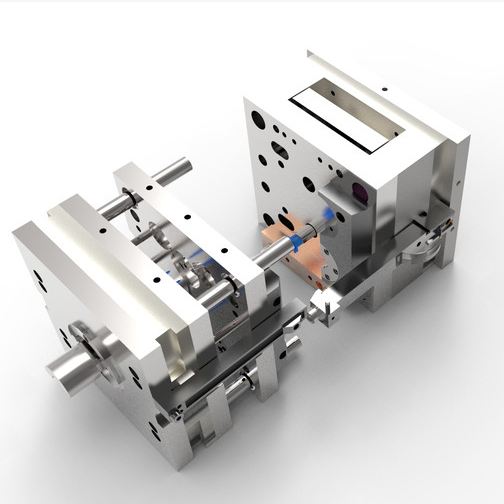
A professional assembly process generally involves:
- Inspecting individual mould components
- Cleaning and preparing precision surfaces
- Checking dimensions and tolerances
- Installing guide pillars and bushes
- Aligning core and cavity sections
- Installing ejector mechanisms
- Fitting sliders and lifters where required
- Connecting cooling systems
- Checking mould opening and closing movement
- Conducting mould testing and trial runs
- Making necessary adjustments before production
Why Choose Professional Injection Mould Assembly?
Professional assembly is particularly important for complex moulds with moving mechanisms, tight tolerances, or multiple cavities. Experienced technicians can identify alignment problems and mechanical issues before the mould reaches full-scale production.
For manufacturers, this can translate into better productivity, lower rejection rates, improved mould reliability, and reduced maintenance costs.
Frequently Asked Questions
1. What is injection mould assembly?
Injection mould assembly is the process of fitting, aligning, and testing different precision mould components to create a complete mould ready for plastic injection moulding.
2. Why is precision important in mould assembly?
Precision ensures that core, cavity, ejector, guide, and moving components operate correctly. It helps prevent defects, excessive wear, and production interruptions.
3. Can mould assembly improve product quality?
Yes. Proper assembly supports consistent mould alignment and operation, which helps manufacturers achieve repeatable dimensions, better surface quality, and reliable component performance.
4. Does proper mould assembly increase mould life?
Proper assembly can contribute to longer mould life by reducing misalignment, friction, mechanical stress, and premature wear of critical components.
5. Is mould trial necessary after assembly?
Yes. A mould trial can help identify issues related to filling, ejection, alignment, cooling, flash, dimensions, and overall mould performance before mass production.
6. Which industries use injection mould assembly?
Injection moulds are widely used for automotive, electrical, medical, packaging, home appliance, consumer product, and industrial plastic component manufacturing.
Injection mould assembly is more than simply putting mould components together. It is a precision-driven process that directly affects product quality, production efficiency, mould durability, machine uptime, and manufacturing costs. For Indian manufacturers seeking reliable plastic component production, investing in accurate mould assembly and professional testing can create significant long-term production benefits.