

How Does Injection Mould Assembly Improve Plastic Manufacturing Efficiency in India?
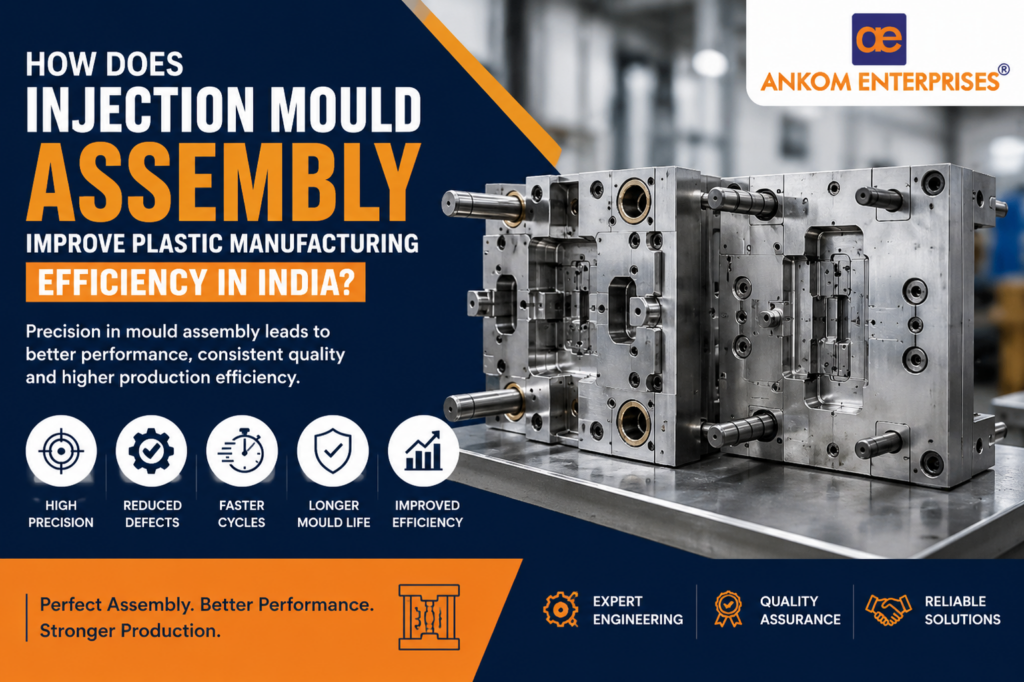
Injection mould assembly in India improves plastic manufacturing efficiency by ensuring accurate alignment, smooth mould movement, reliable ejection, and consistent component production. Proper assembly minimizes defects, reduces downtime, supports faster production cycles, improves mould life, and helps manufacturers maintain consistent product quality while controlling production and maintenance costs. Injection mould assembly is a critical stage in the plastic manufacturing process. An injection mould consists of several precision components, including core and cavity plates, guide pillars, bushes, ejector systems, sliders, lifters, cooling channels, and other mechanisms. Each component must be correctly positioned, aligned, and tested before the mould is used for production. In India’s competitive manufacturing sector, efficient mould assembly can directly influence production speed, component quality, maintenance requirements, and overall manufacturing costs. A professionally assembled mould allows the injection moulding machine to operate more smoothly and consistently. How Injection Mould Assembly Improves Manufacturing Efficiency 1. Ensures Accurate Component Alignment Proper alignment between the core and cavity is essential for producing components with accurate dimensions. Precision assembly minimizes mismatch, uneven wear, and unnecessary stress on mould components. 2. Reduces Manufacturing Defects A correctly assembled mould can help reduce common problems such as: Reducing these issues means less material waste and fewer rejected components. 3. Supports Faster Production Cycles Smooth movement of mould components helps maintain consistent opening, closing, injection, cooling, and ejection cycles. Reliable operation can improve production output and reduce unnecessary cycle interruptions. 4. Improves Mould Durability Incorrect assembly can create excessive friction, pressure, or mechanical stress. Proper fitting and alignment help minimize premature wear and contribute to longer service life for mould components. 5. Reduces Machine Downtime A properly assembled mould is less likely to experience frequent mechanical problems during production. This helps manufacturers reduce unplanned stoppages and maintain more consistent production schedules. 6. Improves Ejection Performance The ejector system must operate accurately to remove finished plastic components without damaging the product or mould. Correct assembly helps ensure smooth and reliable ejection. 7. Supports Consistent Product Quality Manufacturers often require thousands or millions of identical components. Precision mould assembly helps maintain repeatable mould performance, which is important for maintaining consistent product dimensions, appearance, and functionality. Important Steps in Injection Mould Assembly A professional assembly process generally involves: Why Choose Professional Injection Mould Assembly? Professional assembly is particularly important for complex moulds with moving mechanisms, tight tolerances, or multiple cavities. Experienced technicians can identify alignment problems and mechanical issues before the mould reaches full-scale production. For manufacturers, this can translate into better productivity, lower rejection rates, improved mould reliability, and reduced maintenance costs. Frequently Asked Questions 1. What is injection mould assembly? Injection mould assembly is the process of fitting, aligning, and testing different precision mould components to create a complete mould ready for plastic injection moulding. 2. Why is precision important in mould assembly? Precision ensures that core, cavity, ejector, guide, and moving components operate correctly. It helps prevent defects, excessive wear, and production interruptions. 3. Can mould assembly improve product quality? Yes. Proper assembly supports consistent mould alignment and operation, which helps manufacturers achieve repeatable dimensions, better surface quality, and reliable component performance. 4. Does proper mould assembly increase mould life? Proper assembly can contribute to longer mould life by reducing misalignment, friction, mechanical stress, and premature wear of critical components. 5. Is mould trial necessary after assembly? Yes. A mould trial can help identify issues related to filling, ejection, alignment, cooling, flash, dimensions, and overall mould performance before mass production. 6. Which industries use injection mould assembly? Injection moulds are widely used for automotive, electrical, medical, packaging, home appliance, consumer product, and industrial plastic component manufacturing. Injection mould assembly is more than simply putting mould components together. It is a precision-driven process that directly affects product quality, production efficiency, mould durability, machine uptime, and manufacturing costs. For Indian manufacturers seeking reliable plastic component production, investing in accurate mould assembly and professional testing can create significant long-term production benefits.
Plastic Moulding Machine in India: A Beginner’s Guide to Types, Features & Applications
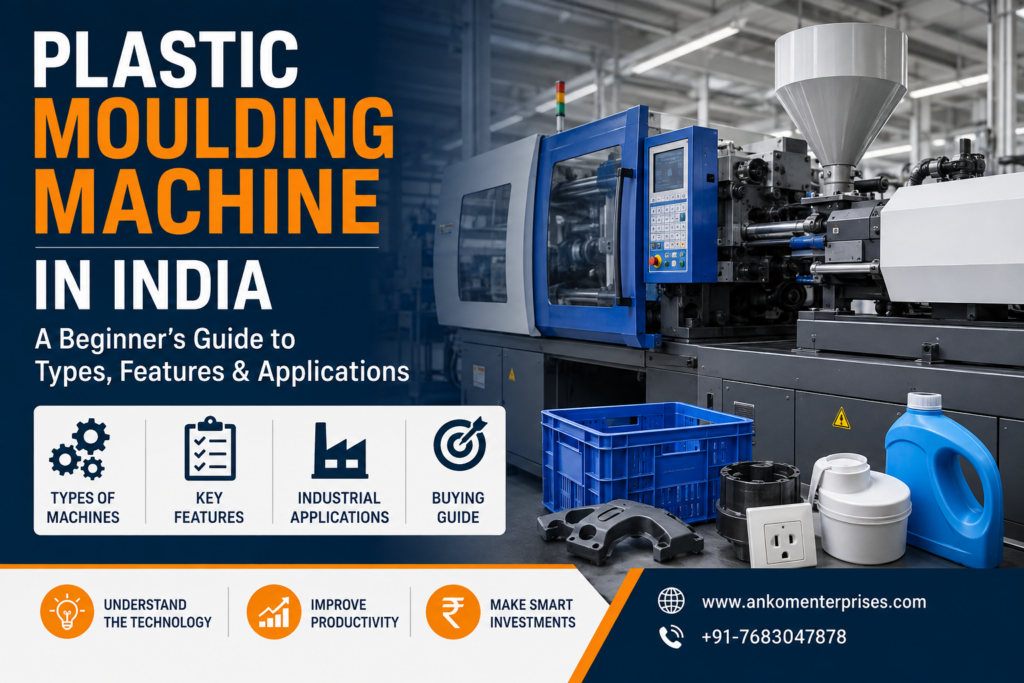
A plastic moulding machine in India is industrial equipment used to shape molten plastic into precise products such as automotive parts, electrical components, packaging items, medical parts and household products. Beginners should understand machine types, clamping systems, injection capacity, automation features and application areas before investing in a moulding machine. India has become one of the fastest-growing manufacturing hubs for plastic products. From consumer goods and automotive components to medical devices and industrial parts, plastic moulding technology is widely used across industries. Choosing the right plastic moulding machine is crucial because it directly affects product quality, production speed, energy consumption and operating cost. For new manufacturers, the market can seem confusing due to different machine types, tonnage ranges and automation options. This guide explains everything a beginner needs to know about plastic moulding machines in India, including types, features, applications, benefits and buying tips. What Is a Plastic Moulding Machine? A plastic moulding machine melts plastic raw material and injects or forms it into a mould cavity. After cooling, the mould opens and the finished product is ejected. The process enables mass production of identical components with high accuracy. Basic working process Major Types of Plastic Moulding Machines in India 1. Injection Moulding Machine This is the most common type used in Indian manufacturing. Best for: Automotive parts, electrical housings, bottle caps, medical components and consumer products. Advantages 2. Blow Moulding Machine Used to manufacture hollow products. Best for: Bottles, containers, drums and tanks. Advantages 3. Extrusion Moulding Machine Plastic is continuously pushed through a die. Best for: Pipes, sheets, films, profiles and cables. Advantages 4. Compression Moulding Machine Material is placed in an open mould and compressed. Best for: Thermoset products, electrical components and industrial parts. Advantages 5. Rotational Moulding Machine Powdered plastic rotates inside a heated mould. Best for: Water tanks, playground equipment and large hollow products. Advantages Comparison of Machine Types Machine Type Product Type Production Speed Accuracy Typical Industries Injection Solid precision parts High Very High Automotive, electrical, medical Blow Hollow products High Medium Packaging, beverages Extrusion Continuous products Very High Medium Pipe, film, cable Compression Thermoset parts Medium Medium Electrical, industrial Rotational Large hollow products Low Medium Tanks, outdoor products Important Features Beginners Should Understand Clamping Force Measured in tons, clamping force keeps the mould closed during injection. Small products may need 50–150 tons, while large automotive parts may require 500+ tons. Injection Capacity Indicates how much molten plastic can be injected in one cycle. Screw Diameter Affects melting efficiency and shot size. Energy Efficiency Modern servo-hydraulic and electric machines consume significantly less power than conventional hydraulic machines. Automation Compatibility Robots and automatic part removal systems improve productivity and reduce labour costs. Control System PLC and touchscreen controls make operation easier and improve process consistency. Safety Features Look for emergency stop systems, guard interlocks and overload protection. Hydraulic vs Servo-Hydraulic vs Electric Machines Feature Hydraulic Servo-Hydraulic Electric Initial Cost Low Medium High Power Consumption High Low Very Low Precision Medium High Very High Maintenance Medium Medium Low Best For Budget setups Most Indian factories High precision manufacturing For most Indian SMEs, servo-hydraulic machines offer the best balance between cost and energy savings. Common Plastic Materials Used Machine selection depends on the material’s melting temperature and processing requirements. Applications Across Indian Industries Automotive Electrical & Electronics Medical Packaging Home Appliances Industrial Products Advantages of Plastic Moulding Machines Limitations to Consider How to Choose the Right Machine in India Step 1: Define the Product Know the product size, weight and material. Step 2: Estimate Production Volume Higher production volumes justify more automated machines. Step 3: Select Tonnage Choose clamping force based on mould size and projected area. Step 4: Check Power Availability Ensure your facility can support the machine’s electrical load. Step 5: Evaluate After-Sales Support Choose suppliers with service engineers, spare parts and training support in India. Step 6: Consider Future Expansion Buy a machine that allows moderate future capacity growth. Approximate Price Range in India (2026) Machine Size Approximate Range 50–100 Ton ₹5–15 lakh 120–250 Ton ₹10–35 lakh 300–500 Ton ₹25–80 lakh 500+ Ton ₹60 lakh to several crores Prices vary by brand, automation level and country of origin. Maintenance Tips for Long Machine Life Preventive maintenance reduces downtime and extends machine life. Latest Trends in Plastic Moulding Machines in India Industry 4.0 Connectivity Machines now support production monitoring and data logging. Energy-Efficient Servo Systems Factories are increasingly replacing conventional hydraulic machines. Robotic Automation Automatic part handling improves consistency. Predictive Maintenance Sensors help detect failures before breakdowns occur. Sustainable Processing Machines are being optimized for recycled plastics and reduced energy consumption. Common Mistakes Beginners Should Avoid A plastic moulding machine is a long-term manufacturing investment. Beginners in India should first understand machine types, product requirements, clamping force, energy efficiency and supplier support before making a purchase. Injection moulding remains the most versatile option for precision plastic components, while blow, extrusion and rotational moulding serve specialized applications. Careful selection and proper maintenance can significantly improve productivity, product quality and profitability. Frequently Asked Questions (FAQs) 1. Which plastic moulding machine is best for beginners in India? For most beginners manufacturing solid plastic components, a servo-hydraulic injection moulding machine is usually the best choice because it offers good accuracy, reasonable cost and lower power consumption. 2. What is the difference between injection moulding and blow moulding? Injection moulding produces solid precision parts, while blow moulding produces hollow products such as bottles and containers. 3. How much does a plastic moulding machine cost in India? Small machines may start around ₹5 lakh, while medium and large industrial machines can range from ₹10 lakh to several crores depending on tonnage and automation. 4. Which industries use plastic moulding machines the most? Major users include automotive, electrical, electronics, packaging, medical, home appliances and industrial manufacturing sectors. 5. What power-saving features should I look for? Look for servo motors, variable-speed pumps, energy monitoring systems and automatic shutdown functions. 6. How often should a moulding machine be maintained? Basic inspection should be
What to Look for in Plastic Mould Manufacturers in India Before Starting Production
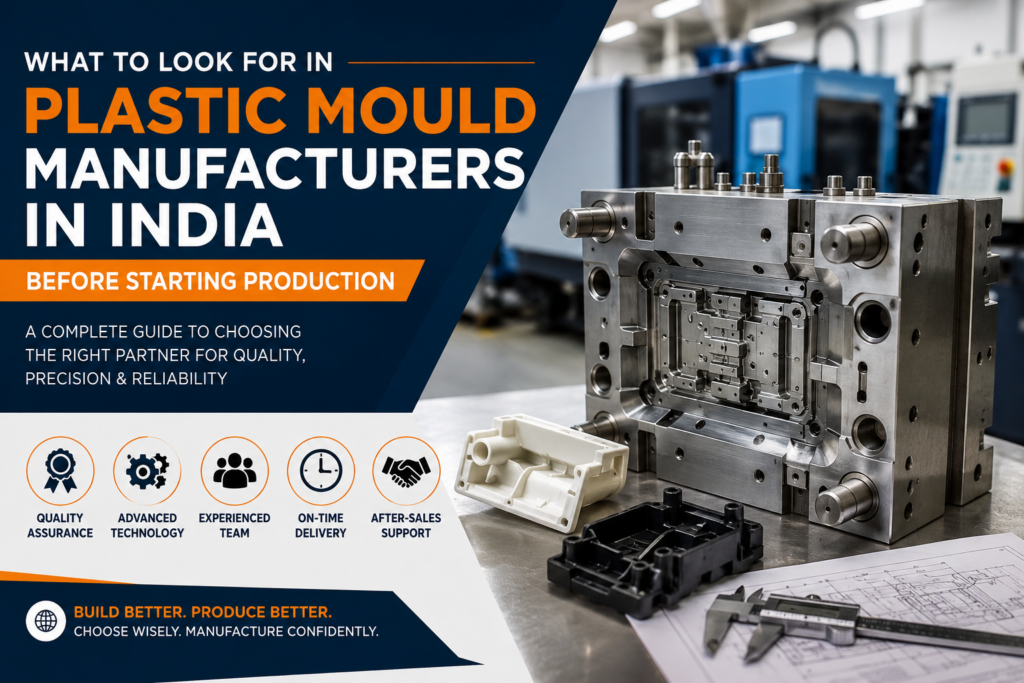
Before selecting a plastic mould manufacturer in India, evaluate their design expertise, tooling capability, quality control system, production capacity, material knowledge, delivery commitment, and after-sales support. A reliable manufacturer can reduce defects, shorten development time, improve product consistency, and lower overall manufacturing costs. Careful evaluation before production helps avoid expensive delays and tooling failures later. Choosing the right plastic mould manufacturer is one of the most important decisions in any manufacturing project. Whether you are producing automotive parts, electrical components, medical devices, packaging products, or consumer goods, the quality of the mould directly affects the quality of the final product. India has become a major hub for plastic mould manufacturing due to its skilled workforce, advanced tooling infrastructure, and competitive production costs. However, not all manufacturers offer the same level of precision, reliability, and technical support. Selecting the wrong supplier can lead to dimensional issues, poor surface finish, repeated mould repairs, production downtime, and increased rejection rates. This guide explains the most important factors you should evaluate before starting production with plastic mould manufacturers in India. Why Manufacturer Selection Matters A plastic mould is a long-term production asset. Once tooling is developed, changing the manufacturer becomes costly and time-consuming. The right partner helps with: Investing time in supplier evaluation at the beginning can save significant money throughout the product lifecycle. 1. Experience in Your Industry Start by checking whether the manufacturer has experience in your specific industry. Different industries have different tolerances, materials, and compliance requirements. Examples Ask for case studies, sample parts, or references from similar projects. 2. In-House Mould Design Capability A strong mould design team is essential for successful production. The manufacturer should use modern CAD/CAM software and perform design analysis before machining. Look for Good design reduces cycle time, minimizes warpage, and improves part consistency. 3. Tool Room Infrastructure Inspect the manufacturer’s tool room and machining capability. Precision tooling equipment directly affects mould accuracy. Important machines Modern equipment indicates better dimensional control and repeatability. 4. Material Selection Expertise The manufacturer should guide you in selecting both mould steel and plastic resin. Common mould steels Common plastic materials Correct material selection affects mould life, cycle time, strength, and product performance. 5. Quality Control System Quality assurance is non-negotiable. Ask about their inspection procedures and certifications. Check for Request sample inspection reports to verify their quality documentation. 6. Prototype and Trial Support Before mass production, the manufacturer should offer prototype or trial mould support. Benefits Trial support reduces the risk of expensive modifications after production starts. 7. Production Capacity and Delivery Commitment Evaluate whether the supplier can meet your required volume and delivery schedule. Ask about A supplier with insufficient capacity may struggle during peak demand. 8. Maintenance and After-Sales Support Moulds require periodic maintenance. Ensure the manufacturer provides long-term support. Essential services Strong after-sales support increases mould life and minimizes downtime. 9. Cost Transparency Do not select a manufacturer only because of the lowest quotation. Compare the total value offered. Evaluate A slightly higher initial cost may result in lower operating cost over the mould’s life. 10. Communication and Project Management Efficient communication is critical during development. Good manufacturers provide Poor communication often causes delays and misunderstandings. 11. Lead Time and Development Process Ask for a clear project schedule covering: Written milestones help track project progress. 12. Sustainability and Manufacturing Practices Many buyers now evaluate environmental responsibility. Prefer manufacturers who use Sustainable manufacturing can also improve process efficiency. Red Flags to Watch Out For Avoid manufacturers who: These signs may indicate quality or reliability issues. Quick Evaluation Checklist Use this checklist before finalizing a supplier: A manufacturer meeting most of these points is generally a safer long-term partner. Selecting the right plastic mould manufacturer in India is not just a purchasing decision, it is a strategic manufacturing decision. Evaluate technical capability, tooling infrastructure, quality systems, material expertise, production capacity, and after-sales support before committing to production. A reliable manufacturing partner can improve product quality, reduce development risk, and support business growth for many years. Companies that invest in precision tooling, engineering expertise, and customer support are better positioned to deliver consistent results. For businesses seeking dependable mould development and precision manufacturing support, Ankom Enterprises focuses on quality-driven tooling solutions, modern machining capabilities, and customer-oriented project execution. Frequently Asked Questions (FAQs) 1. How do I choose the best plastic mould manufacturer in India? Check their industry experience, design capability, tooling infrastructure, quality certification, production capacity, and customer support before making a decision. 2. Why is mould design important before production? Proper mould design improves product accuracy, reduces defects, shortens cycle time, and lowers production cost. 3. What certifications should a plastic mould manufacturer have? ISO 9001 is the most common quality management certification. Industry-specific certifications may also be required depending on the application. 4. Should I visit the manufacturer’s factory before placing an order? Yes. A factory visit helps verify equipment, quality systems, manpower, cleanliness, and actual manufacturing capability. 5. What is the typical lead time for mould manufacturing in India? Lead time varies by mould complexity, but many industrial moulds take approximately 4–12 weeks from design approval to trial. 6. Is the lowest quotation always the best option? No. Evaluate total value including quality, mould life, maintenance support, delivery reliability, and technical expertise. 7. What documents should I request before approval? Ask for design drawings, material specifications, inspection reports, trial reports, project timelines, and warranty details. 8. Can a manufacturer help with product design improvements? Yes. Experienced manufacturers often provide DFM (Design for Manufacturability) suggestions to improve production efficiency and reduce tooling issues.