

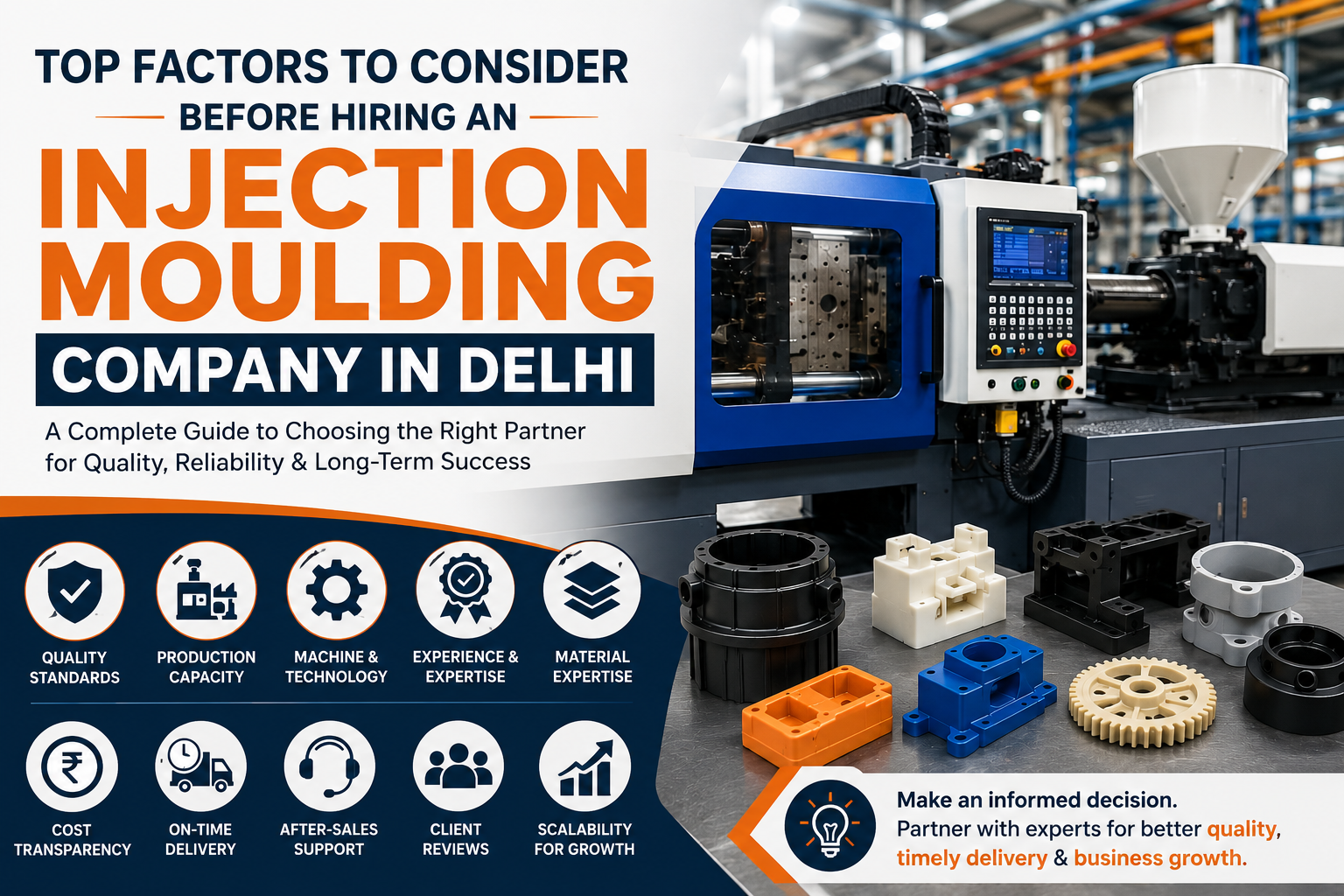
If you are planning to outsource plastic component manufacturing, the most important factors to evaluate are the company’s tooling expertise, quality control systems, production capacity, material capability, delivery reliability, and technical support. Choosing the right injection moulding company in Delhi can reduce defects, lower production costs, improve consistency, and ensure timely supply for your industrial projects.
Injection moulding is one of the most widely used manufacturing processes for producing plastic components with high precision and repeatability. Industries such as automotive, electrical, medical, consumer goods, packaging, and home appliances rely heavily on quality moulded parts for smooth operations.
Delhi has become an important manufacturing hub with many moulding companies offering custom tooling and plastic component production. However, selecting a supplier only on the basis of price can lead to quality issues, delayed deliveries, higher rejection rates, and increased long-term costs.
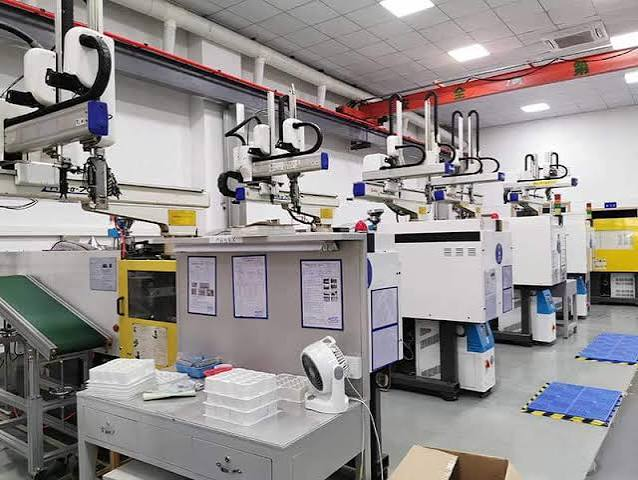
This guide explains the top factors to consider before hiring an injection moulding company in Delhi so that you can make an informed business decision.
1. Experience and Industry Expertise
The first thing to evaluate is the company’s experience in handling projects similar to yours.
Check for:
- Years in injection moulding business
- Industries served (automotive, electrical, medical, consumer products, etc.)
- Complexity of components manufactured
- Experience with custom mould development
An experienced company can identify design challenges early and suggest improvements that reduce manufacturing risks.
2. Tool Room and Mould Manufacturing Capability
A reliable injection moulding partner should have strong tooling support, either in-house or through an established tool room.
Important capabilities:
- Mould design and engineering
- CNC machining
- EDM machining
- Surface grinding
- Mould assembly and maintenance
Strong tooling capability ensures better mould accuracy, longer mould life, and consistent part quality.
3. Quality Control System
Quality should never be compromised in plastic component manufacturing.
Ask whether the company has:
- Incoming material inspection
- In-process quality checks
- Final inspection procedures
- Measuring instruments such as vernier calipers, micrometers, gauges, and CMM (if available)
- Traceability records
A structured quality system helps maintain dimensional accuracy and reduces rejection rates.
4. Production Capacity and Machine Range
Before finalizing a supplier, confirm that they can meet your required production volume.
Evaluate:
- Number of injection moulding machines
- Tonnage range available
- Automation level
- Shift operations
- Monthly production capacity
Adequate capacity prevents production bottlenecks during peak demand.
5. Material Expertise
Different applications require different engineering plastics.
Common materials include:
- PP
- ABS
- Nylon
- POM
- PC
- HDPE
- LDPE
- PVC
- Engineering-grade polymers
The company should understand material selection, shrinkage behavior, mechanical properties, and processing parameters.
6. Design Support and DFM Assistance
A good moulding company does more than just manufacture parts. It should also provide Design for Manufacturing (DFM) support.
Benefits of DFM:
- Reduced material consumption
- Improved mould filling
- Lower cycle time
- Better part strength
- Reduced warpage and sink marks
Early design optimization can significantly reduce overall project cost.
7. Delivery Commitment and Supply Reliability
Timely delivery is critical for production planning.
Verify:
- Average lead time
- On-time delivery performance
- Inventory management practices
- Packaging standards
- Logistics support
Consistent delivery performance helps avoid production stoppages and emergency procurement.
8. Cost Transparency
The lowest quotation is not always the best option.
Ask for a clear breakup of:
- Tooling cost
- Sampling charges
- Production cost per part
- Material cost
- Maintenance charges
- Packaging and transportation
Transparent pricing helps compare suppliers fairly and prevents hidden expenses later.
9. Maintenance and After-Sales Support
Moulds require periodic maintenance to maintain performance.
Ensure the company offers:
- Preventive mould maintenance
- Repair services
- Spare component support
- Process troubleshooting
- Technical assistance after production start
Strong after-sales support minimizes downtime and extends mould life.
10. Certifications and Compliance
Depending on your industry, compliance may be essential.
Look for:
- ISO certification
- Industry-specific standards
- Material test certificates
- RoHS or REACH compliance if required
Certified systems indicate better process discipline and documentation practices.
11. Infrastructure and Technology
Modern manufacturing infrastructure directly impacts quality and productivity.
Prefer companies with:
- CNC machining centers
- EDM machines
- CAD/CAM software
- Automated moulding equipment
- Controlled manufacturing environment
Investment in technology usually reflects a long-term commitment to quality manufacturing.
12. Communication and Project Management
Smooth communication is often overlooked but extremely important.
Assess:
- Responsiveness to emails and calls
- Technical understanding
- Ability to share drawings and reports
- Project update frequency
- Dedicated customer support
Clear communication reduces misunderstandings and speeds up project execution.
13. Client Portfolio and References
Request examples of previous work or customer references.
Review:
- Similar components manufactured
- Production volumes handled
- Repeat customers
- Customer testimonials
A strong client portfolio indicates reliability and long-term business relationships.
14. Scalability for Future Growth
Your production requirement may increase in the future.
Choose a company that can:
- Add new moulds quickly
- Increase machine capacity
- Support multi-cavity tooling
- Handle export requirements if needed
Scalability avoids the need to change suppliers as your business grows.
Quick Evaluation Checklist
| Factor | What to Verify |
|---|---|
| Experience | Similar industry projects |
| Tool Room | CNC, EDM, mould maintenance |
| Quality | Inspection system and records |
| Capacity | Machine range and output |
| Materials | Engineering plastic expertise |
| Delivery | On-time supply history |
| Cost | Transparent quotation |
| Support | Maintenance and technical help |
| Certification | ISO and compliance documents |
| Communication | Fast technical response |
Use this checklist when comparing multiple injection moulding companies in Delhi.
Why These Factors Matter
Selecting the right manufacturing partner can provide:
- Lower rejection rates
- Better dimensional consistency
- Reduced production downtime
- Faster product development
- Improved supply chain reliability
- Lower total cost of ownership
In contrast, a poor supplier selection can result in repeated quality issues, delayed deliveries, and expensive corrective actions.
Hiring an injection moulding company in Delhi should be a strategic decision rather than a price-based purchase. Evaluate tooling capability, quality systems, production capacity, material expertise, delivery reliability, technical support, and communication before placing an order. A capable manufacturing partner not only produces plastic components but also contributes to product quality, cost optimization, and long-term business growth.
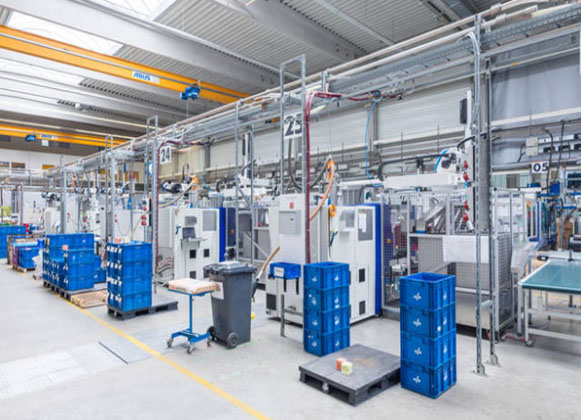
For industrial projects requiring precision moulds and quality plastic components, working with an experienced engineering-driven manufacturer can make a significant difference in overall project success.
Frequently Asked Questions (FAQs)
1. How do I choose the best injection moulding company in Delhi?
Check their experience, tooling facility, quality system, machine capacity, material expertise, delivery record, and customer support before finalizing the supplier.
2. Why is tooling capability important in injection moulding?
Tooling quality directly affects part accuracy, surface finish, cycle time, and mould life. Strong tooling capability ensures consistent production quality.
3. What certifications should an injection moulding company have?
ISO certification is commonly preferred. Depending on the industry, additional compliance such as RoHS or REACH may also be required.
4. Should I select a company based on the lowest price?
No. Consider total value, including quality, delivery reliability, maintenance support, and defect rates. The lowest price may increase long-term costs.
5. What information should I provide before requesting a quotation?
Share component drawings, material specification, annual quantity, tolerances, application details, and any testing or compliance requirements.
6. How can I verify production capacity?
Ask for machine details, tonnage range, number of machines, operating shifts, and current production load.
7. What is DFM in injection moulding?
DFM stands for Design for Manufacturing. It involves optimizing the part design for easier moulding, lower cost, and better product performance.
8. Why is after-sales support important?
After-sales support helps resolve production issues quickly, provides mould maintenance, and ensures uninterrupted supply during the product lifecycle.